Discover the ancient faith of England
Looking for a traditional, orthodox church in the West of England?
We have over a hundred.
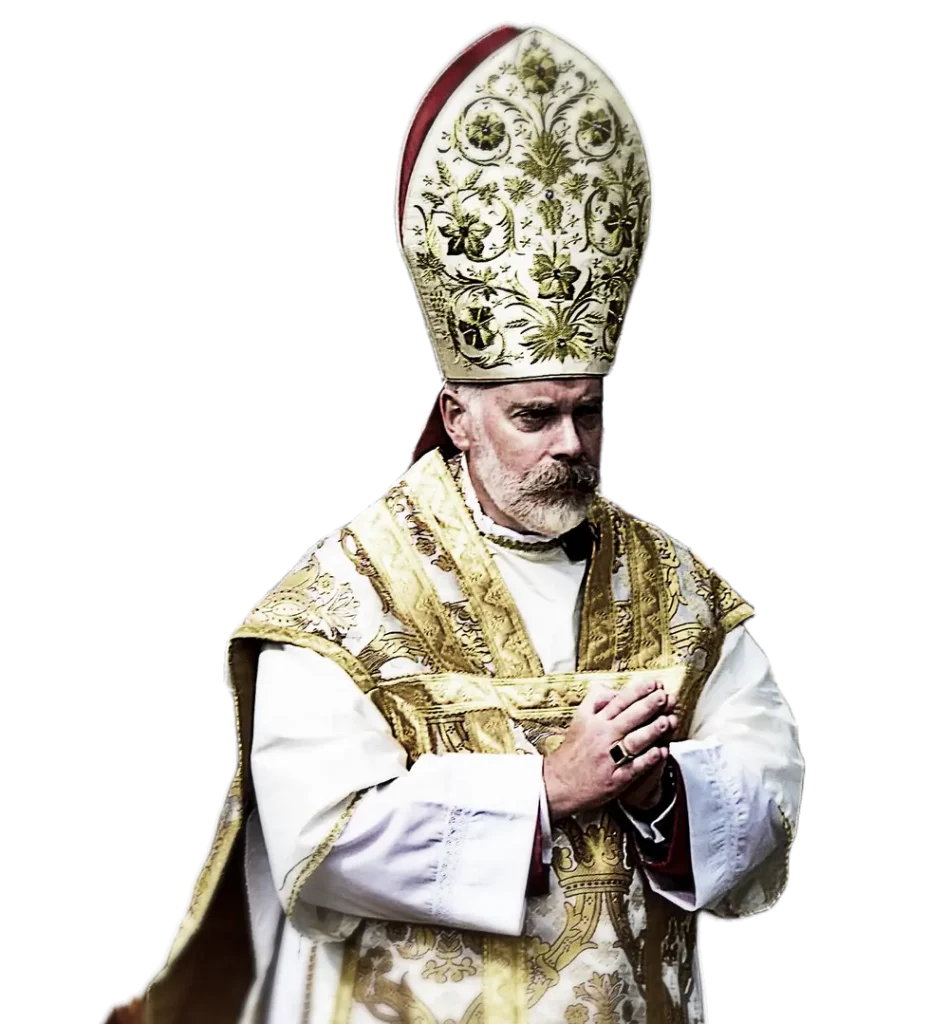
From the Bishop
Blessed be Jesus Christ, true God and true man!
I am delighted you are visiting the See of Oswestry website. I pray that the information you find in these pages draws you further into the life of Christ’s Church so that you might discover his light and truth there.
The See of Oswestry consists of ninety parishes across thirteen dioceses in the west of the Province of Canterbury. These parishes stretch from Chesterfield in the north to Truro in the south west and Reading in the south east. These parishes, in full sacramental communion with their Bishop and in fidelity to the historic faith of the undivided and universal Church, witness within the Church of England to the undiminished fullness of Catholic Truth, which is ever fresh, ever new.
As their Father-in-God, I seek to serve these parishes by teaching the Faith once delivered to the saints, by caring for God’s clergy and people as a shepherd cares for his lambs, and by sanctifying them through the devoted celebration of the Sacraments.
The churches, clergy, and people of the See under their Bishop and with their Bishop are dedicated to three things which we believe will renew the Church in power and fire: sacred worship, energetic evangelization, and selfless service.
Join us in our mission by praying for the life of the See of Oswestry, and by entering into that life through engagement in one of our parishes where Christ is waiting to welcome you.
Gaudete in Domino semper –
✠Paul Oswestriensis
Sacred
worship
Energetic
Evangelisation
Selfless
service
“Ask for the old paths, where is the good way, and walk therein, and ye shall find rest for your souls.” Jeremiah 6:16
Good to know
Questions, answered briefly
What is the Church of England? Why do you call yourselves “Catholic”?
The Church of England proclaims herself part of the Holy Catholic Church, and we take that claim seriously. Some think the Church of England is Protestant because it broke from the jurisdiction of the Pope in the sixteenth century. However, although it was influenced by certain aspects of the reformation, nevertheless, the Church of England retained all the essentials of the Catholic Church, albeit not under the direct authority of the Pope. Anglo-Catholics stress this continuity of Catholic life with the undivided pre-Reformation Church. We are part of the Society of St Wilfrid and St Hilda, formed in 2010 to ensure that those who mean to keep the ancient faith could do so within our national church, following the unprecedented innovation of ordaining women to the priesthood. With our adherence to the traditional male priesthood of the undivided Church, we ensure the continuity of the ancient Catholic faith and the life-giving stream of sacraments in which all can have confidence.
Isn’t the Church of England in decline?
Thanks be to God, our churches are growing. Come, and you will find sound teaching, strong friendship, and joyful reverence amid the beauty of holiness: and at its heart, Christ Himself.
What are your churches like?
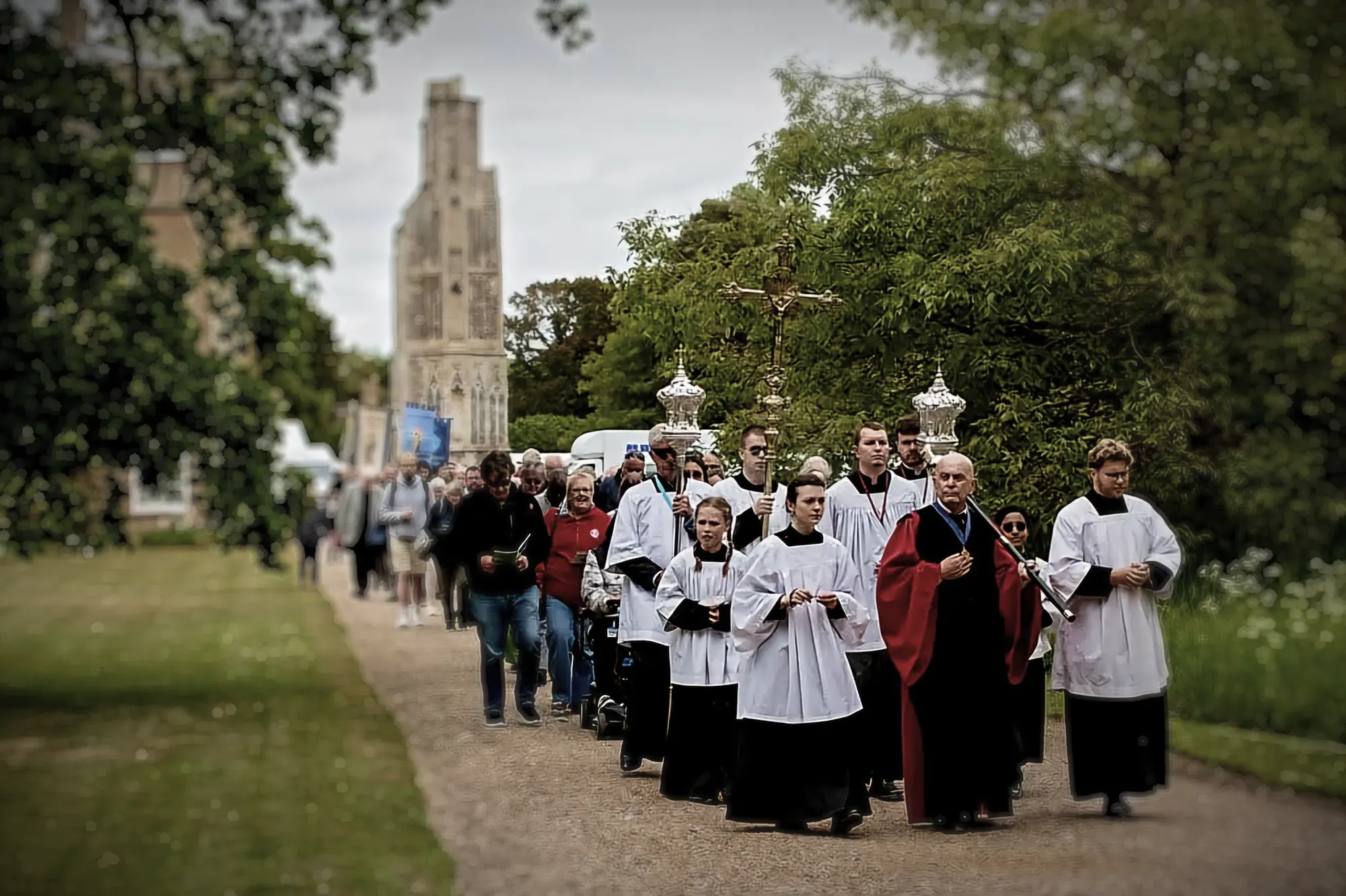
Anglo-Catholics are members of the Church of England or one of its historic offshoots overseas who stress the continuity of the post-Reformation church with its Catholic past. So, when you go to one our churches, you can expect the building and the worship to reflect that Catholic heritage. The altar is the focus of our churches, because that is where the main action of the Mass takes place, when Christ comes among us in bread and wine. You will most likely find statues and icons representing the saints in heaven, who worship alongside us. As to the worship itself, the music may be modern or ancient, the English spoken may be contemporary or Elizabethan, but the pattern is the recognisably the same as that used since ancient times. Expect colourful vestments, candlelight and incense – above all, expect beauty.
How do I visit one of your churches?
Really just turn up for a service! Sit, watch, and take part as you feel able. Afterwards, you might like to talk to one of the parishioners or the priest. For more advice, see New to Church?
Contact
Any more questions?
Do not hesitate to get in touch, and we will get back to you personally.